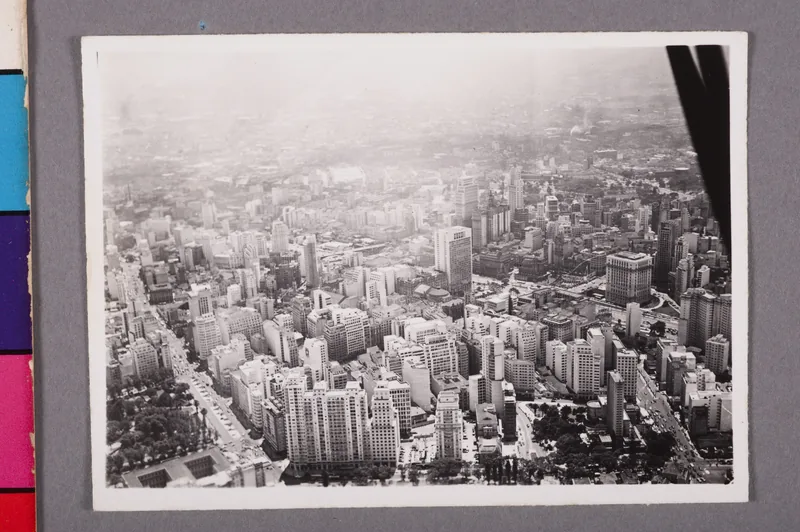
A square renamed on purpose
Before it was called anything to do with a republic, the ground under this square was a militia training field — Praça das Milícias, people called it in the 1700s — and later a rough pasture where locals ran cattle and staged the odd bullfight, known as Largo dos Curros. None of that had much dignity to it. Then, on November 15, 1889, the Brazilian monarchy fell, and São Paulo's city councilors went looking for a piece of ground to rename in the new republic's honor. They picked this one.
The first attempt at a name didn't stick. City hall initially called it Praça 15 de Novembro, after the date of the Proclamation. But São Paulo already had a Rua 15 de Novembro nearby, and the two kept getting confused in everyday use — deliveries misdirected, meetings missed. So the council settled on something plainer and harder to mix up: Praça da República. The square, the district that grew up around it, and eventually the metrô station all inherited that same word, and all for the same reason — they mark the spot the city chose to commemorate 1889.
Why the name kept spreading
Once the square had the name, everything built around it took it too. That's fairly ordinary as far as naming goes, but it's worth noticing how far it traveled. República is not just what people call this patch of green with the painters' fair on Sundays — it's the name of the surrounding district, and it's the name on the metrô map. The district's identity was never really separate from the square's; the square came first, the streets filled in around it starting in the 1890s, and the whole neighborhood absorbed the name by default.
The area's growth after 1892 had a lot to do with the Viaduto do Chá, which linked this stretch to the older colonial center and opened the newer part of downtown to investment. Row houses, then apartment buildings, then commercial blocks followed. If you want the fuller account of how those blocks went up and why downtown took the shape it did, that's covered in How Downtown São Paulo Was Built. The square itself — its layout, its trees, what's actually stood on that ground over two centuries — gets its own telling in Praça da República, Stone by Stone.
The station under the square
The metrô station is a literal case of the name going underground. República station opened in 1982 as part of Linha 3–Vermelha, which runs through Barra Funda, Brás, Tatuapé and out toward Itaquera. It stayed a single-line stop for almost thirty years. Then, in September 2011, Linha 4–Amarela arrived, built directly beneath the square itself, and the station became an interchange — two lines, one name, both keeping faith with 1889.
Linha 4 is the newer, driverless line, and it's the more useful one for getting west — Higienópolis, Paulista, Pinheiros. Linha 3 runs the older east-west corridor through the historic center. Between the two, República station puts a fair share of central São Paulo two stops away or less.
The square was renamed for a form of government. The neighborhood and the station just went along with it.
From the Suite
The Daniel Martins Building sits right on the square, so República isn't a destination guests plan a trip around — it's what's outside the front door. Downstairs and across the street is the square itself, with its Sunday antiques and stamp fair, its old fig trees, and the crowds cutting through toward Avenida Ipiranga or Avenida São João. The station entrance is close enough that a same-day errand across town rarely takes longer than two stops on Linha 3 or Linha 4.
That proximity matters less for sightseeing than for logistics — getting to a meeting on Avenida Paulista, or out to Barra Funda, without needing a car in downtown traffic. Guests who want the wider context of how this stretch of the city fits together might read Avenida São João: The Road That Named a City's Song or The Corner of Ipiranga and São João, both a short walk from the square. And for a look at where the six-monitor office and the rest of the residence fit into a workday spent partly downstairs on the square, there's The Suite and The six-screen office.
A name that held
Names in a city usually drift — a street gets renamed for a politician, then renamed again when that politician falls out of favor, and eventually nobody remembers either version. República has held for well over a century, through a monarchy's fall, a few republics' worth of political change, and a metrô system that didn't exist when the square first took the name. It's a small, steady thing to notice from a window on the PH floor: a plaza, a district and a train line, all still called after the same afternoon in 1889.
Sources
- Estação República (Metrô de São Paulo) - Wikipédia - https://pt.wikipedia.org/wiki/Esta%C3%A7%C3%A3o_Rep%C3%BAblica_(Metr%C3%B4_de_S%C3%A3o_Paulo)
- República (bairro de São Paulo) - Wikipédia - https://pt.wikipedia.org/wiki/Rep%C3%BAblica_(bairro_de_S%C3%A3o_Paulo)
- História e Patrimônio Praça da República - https://pracadarepublica.com.br/historia-e-patrimonio-praca-da-republica/
- HISTÓRIA: Praça da República integrada com os transportes - Diário do Transporte - https://diariodotransporte.com.br/2016/11/13/historia-praca-da-republica-integrada-com-os-transportes-e-retrato-do-desenvolvimento-da-cidade-de-sao-paulo/
At a glance
- Named forthe 1889 Republic
- Nearest metrôRepública · Lines 3 & 4
- From the SuiteDownstairs
Keep reading
Your base
Everything here is a short metrô ride — or a walk — from the Suite in the Daniel Martins Building.
Reserve the Suite ›