The myth of neutral ground
There is a piece of received wisdom in business that says important meetings should happen on neutral ground — a restaurant, a rented boardroom, somewhere that belongs to no one, so that no party has the advantage. It sounds fair and grown-up, and for certain adversarial negotiations it has its place. But as a general rule it is mostly a way of ensuring that nobody hosts, nobody is comfortable, and the conversation happens in a characterless place that helps no one.
The truth that experienced dealmakers know is quieter and less egalitarian: hosting is an advantage, and giving it away for the sake of "neutrality" is often giving away something valuable for nothing. The side that hosts — that receives the other on ground it controls, comfortably, generously — holds a set of small, fair, cumulative edges that neutral ground erases for everybody. This page makes the case for the opposite of the received wisdom: that for many of the conversations that matter, the best place to close a deal is where you stay, on your own floor, high above the city, as the host rather than the guest.
What home ground actually buys you
The advantage of home ground is not mystical; it is a stack of concrete, ordinary things that happen to add up.
You are relaxed because you know the room, while your counterpart is spending a small fraction of their attention orienting to an unfamiliar place. You control the environment — the temperature, the seating, the pace, the refreshment — and can use all of it to make the conversation go well. You are the host, which casts you in a generous, gracious role rather than a supplicant one. And you never have to pack up and leave, so the conversation can run its natural course. None of these is decisive on its own. Together, over the length of a real negotiation or a relationship being built, they tilt the ground a few degrees in your favor — fairly, because you earned the advantage by hosting, and quietly, because none of it is the kind of thing your counterpart resents. Home ground is not a trick. It is simply the accumulated benefit of being the one who received.
Comfort is leverage
The most underrated advantage of hosting is the simplest: you are comfortable, and comfort is a form of leverage.
A person who is at ease thinks more clearly, listens better, and holds their nerve longer than a person who is subtly off-balance in an unfamiliar setting. When you host in your own suite, you are the one operating from comfort — your room, your rhythm, your coffee — while your counterpart, however welcome you make them, is by definition a guest finding their footing. This is not about intimidation; a good host makes a guest feel more comfortable, not less. It is about the fact that you retain your full composure while the other side spends a little of theirs adjusting, and in a close conversation, that reserve of composure is worth having. The person who is at home is harder to rush, harder to rattle, and better able to steer. You give all of that up the moment you agree to meet on ground that is no one's.
The reciprocity of being hosted
There is an old and reliable piece of human wiring at work when you host someone well, and it operates entirely in your favor.
When you receive a person generously — a warm welcome, good coffee, a beautiful private space, genuine hospitality — they arrive at the substance of the conversation already a little disposed to meet you halfway. It is not a bribe and it buys nothing improper; it is simply that people are inclined to be gracious in return to those who have been gracious to them. A guest you have hosted well is, at the margin, a more generous negotiating partner than a stranger you met in a rented box, because the hosting has established a small debt of goodwill that good people instinctively want to honor. Neutral ground generates none of this, precisely because nobody is the host and nobody is the guest. Hosting on your own ground is how you put that ancient reciprocity to work, gently and honestly, in the service of the deal.
Control of the tempo
Deals have a rhythm, and the host controls it in ways the guest and the clock-watcher cannot.
In a rented room, the booking sets the tempo: you have the slot, and the conversation is shaped, consciously or not, by the countdown to when it ends. On your own floor, there is no countdown, and you can let the conversation take the time it needs — slowing it when slowing helps, extending it when extending helps, moving it from the desk to the lounge to the bar as the mood shifts. That control of tempo is a real instrument. A negotiation that can breathe often lands better than one squeezed into an hour; a relationship that can unfold over an unhurried evening builds faster than one rationed to a meeting slot. When you close where you stay, you own the clock, and owning the clock is quietly one of the most useful things you can own in a deal.
The setting as a statement of confidence
Where you choose to host says something about you before you speak, and hosting on your own ground, done with ease, is a statement of confidence.
To receive a counterpart in your own private space, comfortably and without apology, signals that you operate from a position of strength — that this is simply how you do business, at this level, in a room like this. It is the opposite of the anxious energy of meeting on neutral ground precisely so that no one has the edge. Confidence is persuasive in a deal; it makes the other side feel they are dealing with someone substantial. The caveat, as always, is that the confidence must be quiet — a host who swaggers undoes it, while a host who is simply, calmly at home in an impressive room lets the confidence land on its own. Hosting where you stay, gracefully, is one of the most natural ways to communicate that you negotiate from strength.
The evening that does what the meeting cannot
Some deals are not closed in the meeting at all; they are closed in the hours after it, and hosting where you stay is what makes those hours possible.
There is a kind of trust that only builds when people spend unhurried time together — over dinner, over a drink, in conversation that has drifted past the agenda into something more human. A rented boardroom cannot give you that; it closes at the end of your slot and sends everyone back into the night separately. A suite can. When you host where you stay, the meeting can become an evening: talk terms at the desk, ease into the lounge, end at the bar with the city lit below, all on one private floor, without the spell being broken by a check or a coat-check or the clatter of a restaurant. That continuous, private arc — business softening into relationship over the course of an evening — is where a great many deals are actually sealed, and it is available only to the host who has somewhere to host it.
Hospitality on your own terms
When you host, you set the terms of the hospitality, and that is a subtle but real form of control over how a relationship develops.
You decide what to offer and when — the coffee on arrival, the drink at the close, the working dinner if the occasion earns it. You decide the register: brisk and businesslike, or warm and expansive. You can read your guest and adjust in real time, dialing the generosity up or down to match the person and the moment. On neutral ground, nobody sets these terms; the restaurant or the rented room imposes a generic script on everyone. Hosting on your own ground lets you tailor the entire experience of the meeting to the specific relationship you are trying to build — and a relationship built on hospitality you controlled and calibrated is a stronger one than any that a neutral venue could have produced.
The counterpoint: when neutral ground is right
Honesty requires the other side of the argument, because home ground is not always the right play, and knowing when to give it up is part of using it well.
There are genuinely adversarial negotiations — a hard, one-off, zero-sum deal with a wary counterpart — where meeting on truly neutral ground reassures the other side and removes any suspicion of manipulation, and where that reassurance is worth more than the host's edge. There are counterparts whose own rules or instincts make them uncomfortable meeting anywhere but neutral territory, and forcing your ground on them backfires. And there are first encounters with people who do not yet know you at all, where hosting can read as presumptuous before any trust exists. In all of these, offer neutral ground gladly. The home-ground argument is for the meetings where relationship and hospitality help — which is most, but not all, of them. The skill is telling the difference.
Reading whether home ground will help
Before you host, it is worth a moment's read of whether your ground will help or hurt with this particular guest, because the answer is not always the same.
Ask yourself: does this person respond well to being hosted, or would they feel managed? Is the relationship one where warmth and generosity are assets, or is this a cold transaction where they would prefer sterile neutrality? Is there a power or comfort dynamic that hosting would ease, or one it would aggravate? For the large majority of business relationships — where trust, warmth and being valued genuinely matter — hosting on your ground is a clear positive. For the rare wary or adversarial exception, read it and choose neutral. The point is not to host reflexively but to host deliberately, using your own ground when it helps and setting it aside when it does not. A host who reads the room this way gets the benefit without ever paying the cost.
Where you stay as where you close
All of this becomes practical when the place you stay is genuinely good enough to host from, which is the whole premise of the Presidential Suite.
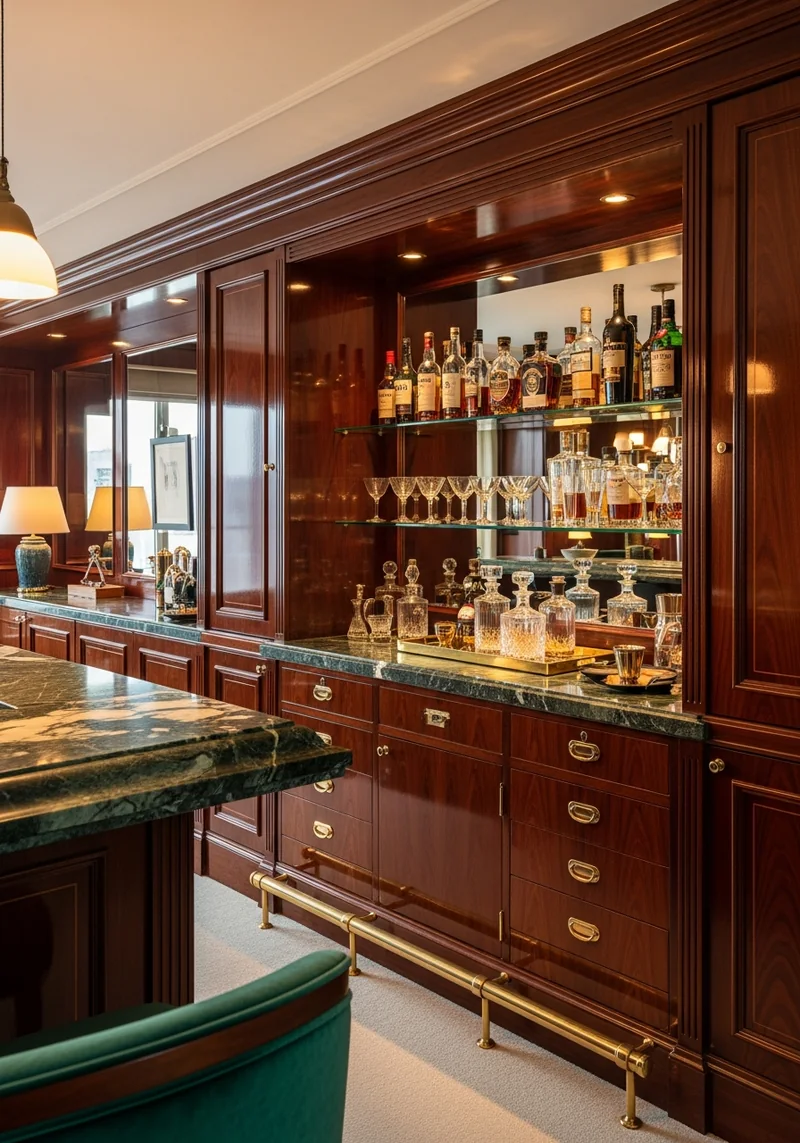
A private floor, high above central São Paulo, gives you everything the home-ground argument asks for: a comfortable, controlled, impressive setting that is unmistakably yours; the six-screen desk for the working part; the lounge and the brass bar for the human part; and the whole evening's arc available on one floor without ever changing venue. You are not hosting from a cramped hotel room or a borrowed office; you are hosting from a room that flatters the occasion and the guest. That is what turns "close the deal where you stay" from a nice phrase into a real advantage — the staying place has to be worth hosting in, and this one is built for exactly that. The practical craft is on how to host a client meeting in a penthouse.
Doing it with grace
The whole advantage evaporates if you host clumsily, so the final principle is that home ground works only when it is offered generously and never imposed.
Invite, do not summon. Offer the choice of your floor or neutral ground, and mean it. Host warmly, keep the setting quiet rather than boastful, and make your guest more comfortable than you are, not less. Done this way, hosting on your own ground reads as generosity and confidence, and the guest leaves feeling valued — which is the entire point. Done clumsily, with pressure or swagger, it reads as a power play and poisons the very relationship it was meant to build. The advantage of home ground is real, but it is a gift you give your guest, not a trap you spring on them. Offer it as a gift, and it works every time.
The home-ground effect is real
The advantage of hosting is not a piece of mysticism or salesmanship; it is a widely recognized dynamic that shows up anywhere people negotiate, from sport to diplomacy to business.
The party on home ground is more comfortable, more confident, more in control of the setting, and operating from a base of familiarity while the visitor adjusts. None of that is unfair or manipulative — it is simply the natural benefit of being the host, the same benefit a team enjoys playing at home. Experienced negotiators are well aware of it, which is precisely why the choice of venue is itself a negotiation in serious deals, and why "let's meet at yours" or "let's meet on neutral ground" is never a throwaway line. Understanding that the effect is real lets you use it deliberately: offer to host when hosting helps you, and recognize when a counterpart's insistence on their ground or on neutral territory is them reaching for the same advantage. The venue is part of the deal. Treat it as such.
The small signals that tilt a room
Hosting well works through an accumulation of small signals, and it is worth knowing what they are so you can send them on purpose.
The private arrival with no front desk signals discretion and status. The prepared room signals that you took the meeting seriously. The good coffee, offered warmly, signals hospitality and ease. The unhurried pace signals confidence — you are not watching a clock. The impressive but understated setting signals that you operate at a certain level without your having to say so. And the move to the bar or the window for the close signals that the relationship, not just the transaction, matters to you. None of these is a trick; each is a genuine courtesy that also happens to work in your favor. Together they compose the impression that you are a serious, gracious, confident counterpart worth doing business with — which is exactly the impression that makes a deal easier to close. Home ground is the stage; these small signals are the performance.
Doing it in São Paulo
In São Paulo specifically, hosting on your own ground is not just advantageous but culturally resonant, which makes it land even better here than elsewhere.
Brazilian business is relationship-driven to a degree that surprises people from more transactional cultures — trust and personal warmth matter as much as terms, and hospitality is a genuine language of respect. Receiving a counterpart well, offering the cafezinho, taking time over the human part before the business part: these are not delays here, they are how deals are properly done. So hosting a São Paulo counterpart on your own beautiful private floor, with genuine warmth and no rush, speaks the local language of business fluently. You are not merely gaining a home-ground edge; you are showing that you understand how relationships are built in this city. For anyone doing deals in Brazil, that cultural fluency, expressed through good hosting, is worth a great deal — and a private base to host from is what lets you express it.
The practical setup for a deal
Knowing that hosting helps is one thing; doing it well is another, and the practical craft is what turns the theory into a closed deal.
The essentials: receive them yourself, warmly, with no front-desk friction; have the room prepared and the coffee ready; conduct the business in the working part of the floor; read the pace and let a good conversation run; and move to the bar or the window to mark the close. Offer the setting as a gracious invitation, never a summons, and keep the whole thing professional and unhurried. Done this way, hosting on your own ground becomes a genuine advantage that your guest experiences as generosity rather than pressure — which is the only way it actually works. The full step-by-step is on how to host a client meeting in a penthouse, and the broader question of whether meeting in a suite is even appropriate is answered on is it normal to hold business meetings in a suite. Get the craft right and the room does the rest.
Using the advantage ethically
Because home ground is a genuine advantage, it is worth a word on using it ethically, since the whole thing works only when it is generous rather than manipulative.
The home-ground edge is fair — you earned it by hosting — but it should be used to make a guest comfortable and a relationship stronger, not to unsettle or pressure them. The line is simple: everything you do should make your guest feel more at ease and more valued, never less. A host who uses the setting to intimidate, who plays power games with the space, who makes a guest feel small in an impressive room, has misunderstood the entire mechanism and will poison the relationship they meant to build. Home ground works precisely because it reads as hospitality, and hospitality is generous by definition. Use the advantage to give — a better welcome, a private space, genuine care — and it strengthens the deal. Use it to dominate and it backfires. The ethical way is also the effective way, which is a happy alignment worth remembering.
The setting in a tough negotiation
Even in a genuinely tough negotiation, the setting plays a role, and understanding it helps you decide when to host and when not to.
In a hard, adversarial negotiation, the calculus shifts: your counterpart may be wary of your ground, and meeting on neutral territory can reassure them and keep the focus on the substance. But even then, if there is any relationship to preserve — and in most business there is, because you may deal again — hosting some of the conversation on your ground, generously, can soften an adversarial dynamic into a more workable one. The judgment is about reading the specific negotiation: where the relationship matters and warmth helps, host; where it is purely adversarial and trust is absent, lean neutral. Home ground is a tool with a range of uses, and a skilled negotiator knows when to deploy it fully, when to offer it lightly, and when to set it aside — using the setting deliberately rather than reflexively.
When a deal takes several meetings
Not every deal closes in one sitting; the important ones often unfold over several meetings, and hosting the whole sequence on your own ground compounds the advantage.
When you receive the same counterpart on your floor across a series of conversations, each meeting builds on the last: the familiarity grows, the comfort deepens, the relationship accumulates in a consistent place that becomes associated with progress. By the third visit they know the room, know the coffee, know the rhythm — and that familiarity itself is a kind of trust. A deal conducted across a rotating series of rented rooms and restaurants never develops this; each meeting starts cold in a new anonymous place. Hosting the sequence in one private base gives the whole negotiation a home, and a negotiation with a home tends to move faster and warmer than one conducted in a series of neutral boxes. If the deal will take several meetings, hosting them all where you stay is one of the most quietly effective things you can do.
Hosting the signing itself
The moment a deal actually closes deserves a setting worthy of it, and there are few better places to sign than a private floor high above the city.
When it comes time to sign — to shake hands, to mark the thing done — doing it in your own beautiful private space, perhaps with a drink at the bar and the city lit below, turns a transaction into an occasion. People remember where they closed important deals; giving that memory a spectacular, private setting rather than a conference-room table is a gift to the relationship and a fitting punctuation to the work. It also keeps the final, sometimes delicate moments entirely private, with no facility staff hovering and no clock ending your booking mid-handshake. For the close itself — the signing, the toast, the handshake that seals it — hosting where you stay lets you mark the moment properly, which is exactly what such moments deserve.
What your guest takes away
Long after the terms are forgotten, your counterpart remembers how the deal felt, and hosting well shapes that memory in your favor.
A guest who was received warmly in a beautiful private space, hosted generously, and treated as someone who mattered leaves with a positive impression of you that outlasts the specifics of the deal — and that impression is the foundation of every future dealing between you. Business relationships are long games, and the feeling a counterpart carries away from an encounter is a real asset for the next one. Hosting on your own ground, done with grace, plants exactly the memory you want: that you are a serious, gracious, substantial party who does business at a high level and treats people well. That memory pays dividends far beyond the deal at hand. What your guest takes away is, in the long run, worth more than the terms you agreed.
The mistakes that squander home ground
Home ground is an advantage you can throw away, and it is worth knowing the errors that squander it so you can avoid them.
The first is imposing rather than offering — making the guest feel summoned, which breeds resentment instead of goodwill. The second is swaggering — letting the impressive setting become a boast, which curdles confidence into arrogance. The third is neglecting the guest's comfort — being so pleased with your room that you forget to make them at ease. The fourth is rushing — treating the freedom from a clock as license to run long, or conversely failing to use the unhurried tempo the setting allows. And the fifth is misreading the counterpart — hosting someone who would genuinely prefer neutral ground, and pressing your advantage where it does not fit. Avoid these five and home ground stays an advantage; commit them and you convert a gift into a liability. The whole thing rests on generosity, not dominance.
First-time versus established relationships
The home-ground play works differently depending on whether you already have a relationship, and matching the approach to the stage matters.
With an established relationship — a counterpart you know, a partner you have dealt with before — hosting on your own ground is natural and welcome; it deepens a bond that already exists. With a first-time counterpart who does not yet know you, hosting can occasionally read as presumptuous before any trust exists, so it is often wiser to meet first on neutral ground and save the home-ground hosting for once the relationship has begun. The rule of thumb: host where there is a relationship to host; be more neutral where there is not one yet. Applied with that judgment, home ground helps at every stage — you simply lead with it later in a new relationship and earlier in an established one. Reading which stage you are in, and choosing the venue accordingly, is part of using the advantage well.
A short FAQ
Quick answers to the questions people have about hosting a deal on their own ground.
- Isn't neutral ground fairer? For hard, adversarial, one-off deals, sometimes yes — but for relationship-driven business, hosting is a fair and real advantage.
- Won't hosting seem like a power play? Not if you offer rather than summon and host generously — then it reads as warmth and confidence.
- What if my guest prefers to meet elsewhere? Then you meet them elsewhere, graciously — always offer the choice.
- Is this especially useful in São Paulo? Yes — Brazilian business is relationship-driven, and hosting well speaks the local language.
- How do I actually run it? See how to host a client meeting in a penthouse.
The short version
Neutral ground is overrated. It was invented to make sure nobody has an advantage, and it succeeds mainly at making sure nobody hosts and nothing is memorable. For the conversations that actually matter — the relationship being built, the deal being closed, the partner being courted — the better play is usually to host, on your own ground, as the confident and generous party who received the other well.
Where you stay can be exactly that ground. A private floor, high above São Paulo, where you are comfortable and in control and able to host an afternoon or a whole evening on your own terms, is home-ground advantage made physical. Close the deal where you stay — tell us when you need the floor, and we will have it ready.
Questions before you commit? The reserve page reaches the host directly — we reply within a day.
At a glance
- EdgeHome ground
- SettingPrivate, high up
- ForThe talks that matter
Keep reading
Your base
Everything here is a short metrô ride — or a walk — from the Suite in the Daniel Martins Building.
Reserve the Suite ›