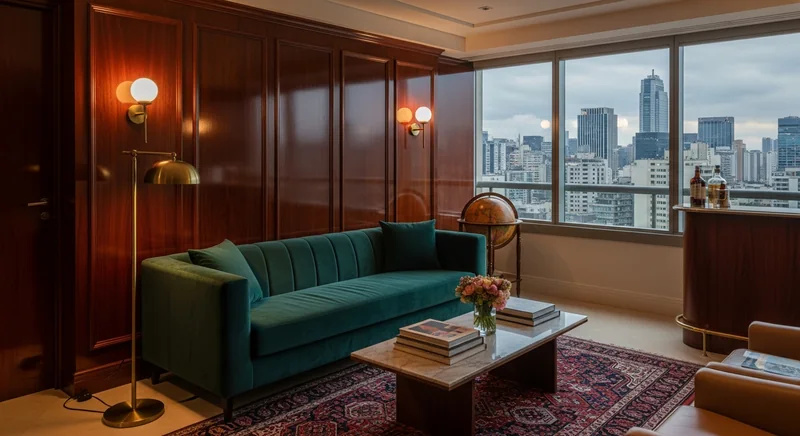
The room is half the meeting
Every meeting has a script and a stage, and most people rehearse the script and ignore the stage. That is a mistake, because the room your guest walks into does a great deal of the talking before you say a word — it sets their mood, tells them how seriously you took the occasion, and frames everything that follows. A penthouse suite is an unusually good stage, but only if you use it deliberately. Left to chance, a grand room can read as show-off, or awkward, or oddly casual. Handled with care, it becomes the most persuasive room you will ever host a meeting in.
This is the practical guide to that care — how to run a client meeting in the Presidential Suite so that the setting works for you rather than merely impressing and then getting in the way. It covers the whole arc: the invitation, the preparation, the arrival, the opening, where to sit, how to use the six-screen desk, how to pace it, how to close, and what to do after. None of it is complicated. All of it is the difference between a meeting that happens to be in a nice room and a meeting the room helped you win. For the deeper question of whether to meet in a suite at all, start with is it normal to hold business meetings in a suite; this page assumes you have decided to, and want to do it well.
The invitation: offer, don't summon
The whole thing starts with how you invite them, and the golden rule is that you offer the suite as a choice, never issue it as a command.
The graceful version sounds like this: "I'm set up on the top floor of a building right on Praça da República — a proper desk, a good view, complete privacy. Happy to receive you there, or to meet you somewhere neutral if that's easier — whatever suits you best." That single construction does three things at once. It signals the quality of the setting without boasting about it. It makes clear the space is private and professional, not personal. And, crucially, it hands the decision to your guest, so that coming up is their choice rather than your instruction. A guest who chooses the suite arrives comfortable; a guest who felt summoned to it arrives wary. The offer-not-summon framing is the single most important move in the whole sequence, because it removes the only real awkwardness a suite meeting can carry.
If they would rather meet downstairs or bring a colleague, take it gladly and think nothing of it — a good host makes either path frictionless. Most, given a genuine choice, will happily come up, curious and a little flattered. But the choice has to be real, or the gesture curdles.
Before they arrive: set the stage
A meeting in a suite should feel like a room that was readied for the guest, not a place you happen to be staying. Spend fifteen minutes before they arrive making it so.
Set the working half of the floor for business: the six-screen desk clear and ready, chairs positioned, anything you plan to present already loaded and tested. Tidy the living half so it reads as a calm, elegant backdrop rather than a lived-in bedroom — the point is that the eye lands on the office and the view, not on your open suitcase. Decide in advance the two positions the meeting will use: where you will sit for the business itself (the desk, or the low table in the lounge) and where you will move for the close (the bar, or standing at the window). Have coffee ready to offer the moment they arrive. And handle the light: warm, not harsh, with the city visible rather than washed out. A room that has obviously been prepared for a guest flatters that guest, and the preparation takes minutes.
Arrival: the advantage of no front desk
Arrival is where a private floor quietly outclasses every boardroom, so make the most of it.
Your guest does not check in, wear a badge, wait in a shared lobby, or get processed by a security desk. They come up, the lift opens onto your floor, and you receive them directly — ideally meeting them as the doors open, so the very first moment is a warm greeting from you rather than confusion about where to go. That seamless arrival — street to private floor, no institutional friction — sets a tone of ease and exclusivity that a rented meeting room simply cannot. It tells the guest, before a word of business, that this will be a private, considered, grown-up conversation. Small logistical kindness matters here too: make sure they know the building, the floor, and that you will meet them; a guest who arrives slightly lost starts on the back foot, and the whole point is that they should not.
The opening: coffee first, business second
Resist the urge to start with the deal. The first few minutes are for hospitality, and in São Paulo especially, that means coffee.
Offer a coffee — the small, strong cafezinho is the local grammar of welcome, and offering one is a genuine courtesy rather than a delay. Let the first few minutes be human: the view, the building, their trip, anything but the agenda. This is not wasted time; it is the time in which your guest decides how they feel about being here, and a warm, unhurried opening makes everything that follows easier. It also lets the room do its gentle work — people relax into a beautiful, private space if you give them a moment to, and a relaxed counterpart is a more generous one. The mistake is to be so eager to prove the meeting was worth the trip up that you skip the welcome and go straight to slides. Host first. The business will still be there in five minutes, and it will go better.
Where to sit, and why it matters
The suite gives you more than one place to hold the conversation, and choosing deliberately shapes its tone.
For working sessions — numbers, a document, a walkthrough, anything where you want focus and a sense of shared purpose — use the six-screen desk. Sitting alongside a guest facing a wall of screens is collaborative and serious; you are both looking at the same thing, solving it together, and the setup signals competence without a word. For softer conversations — relationship-building, a first real meeting, a negotiation where you want ease rather than intensity — use the low table in the lounge, where the seating is comfortable and the mood is conversational rather than transactional. Knowing which register your meeting needs, and seating it accordingly, is a small piece of stagecraft that pays off. And you can move between them as the meeting shifts — start soft in the lounge, move to the desk when it is time to get concrete — using the geography of the floor to guide the arc of the conversation.
Using the six screens without showing off
The wall of monitors is a genuine asset for a meeting, but only if you use it as a tool rather than a trophy.
When there is something to present — a model, a deck, a data room, a design — the six-screen desk is a formidable stage: you can put the main thing large on the center screens and keep the supporting material visible around it, so the whole picture stays in front of everyone instead of being paged through one slide at a time. That is a real advantage for any meeting with substance to show, and it makes you look organized and in command of your material. The discipline is to use it for their benefit — to make the thing clearer — not to marvel at the setup. Load and test whatever you will show before they arrive, so it comes up on the first try; nothing undoes the authority of a great setup like fumbling with cables in front of a client. Used well, the screens make your case more clearly than any boardroom projector. Used as a boast, they distract. The rule is the same as for the whole room: let it be quietly excellent and keep the attention on the work.
Pace it like a host, not a renter
A meeting in a rented room runs on a clock — you booked the hour, the cleaner is waiting, and everyone feels the countdown. A meeting in your own suite runs on the conversation, and that freedom is one of its great advantages, if you use it well.
Because there is no hard stop, you can let a good conversation breathe. If the substance is landing and the relationship is building, you are not forced to wrap because the booking ended; you can follow the thread, move from the desk to the lounge, order more coffee, let it become the longer and better meeting it wants to be. Equally, you should not let the absence of a clock make you sprawl — a meeting with no shape is as bad as one cut short. The skill is to pace it as a good host paces an evening: attentive to the guest's energy, willing to extend when it is working, gracious about ending when it is done. Watch your guest, not the time. When the business is genuinely complete and the moment feels right, you move to the close rather than filling the space with more talk. Reading that moment — and having the freedom to honor it — is a luxury the boardroom never gives you.
The close: move to the bar, the view
The single most useful piece of choreography a suite offers is the ability to move for the close, and it is worth doing on purpose.
When the business is done and it has gone well, do not just shuffle papers and say goodbye at the desk. Move fifteen steps — to the brass bar, or to the window with the city below — and mark the moment. Offer a drink if the hour and the relationship suit it; stand at the glass and let the view do what it does. This physical shift from the working half of the floor to the living half signals, without a word, that the formal part is over and the human part has begun, and it is in that human part that relationships are actually built and deals are actually sealed. Central São Paulo at dusk, seen from a private floor, is a genuinely memorable close to a meeting, and memorable closes are what your guest carries away and tells their colleagues about. Even a five-minute move to the window before they leave transforms a transactional meeting into a hosted occasion. That is the suite's trump card; play it.
Food, drink, and the longer form
Depending on the meeting, hospitality can range from a coffee to a full evening, and matching it to the occasion is part of hosting well.
For a standard meeting, coffee and water, offered warmly, is plenty — do not over-produce a simple conversation. For something more significant — a relationship you are investing in, a negotiation that benefits from time, a guest who has traveled to see you — consider extending into a drink at the bar or a working dinner, which the suite handles beautifully because the whole evening can unfold privately on one floor without changing venue. The kitchen and bar make it easy to host food and drink properly rather than herding everyone to a restaurant where the next table can hear the deal. The principle is to scale the hospitality to the stakes: a quick alignment call needs a coffee; a make-or-break relationship deserves an evening. The suite can do either, and doing the right one signals that you understood the meeting's true weight.
The follow-up that seals it
The meeting does not end when the guest leaves; it ends when you send the follow-up, and a meeting worth hosting in a suite is worth closing with a proper one.
Send a short, warm note the same day or the next morning: thank them for coming up, restate what you agreed, and confirm the next step. Beyond the ordinary good practice of it, the follow-up quietly does one more job — it puts the suite meeting firmly on the record as the professional occasion it was, which is exactly how you want it remembered. A well-hosted meeting followed by a crisp, organized follow-up tells your counterpart that the impressive room was matched by impressive execution, and that pairing — a beautiful setting and a sharp operator — is a powerful thing to have communicated. The room opens the door; the follow-up walks through it.
Common mistakes to avoid
A few errors recur, and all of them are easy to sidestep once named.
- Summoning instead of offering. Never make the suite feel compulsory. Always give a genuine alternative.
- Boasting about the room. Let the view speak. A host who narrates the luxury undercuts it; a host who barely mentions it lets it land.
- Skipping the welcome. Going straight to business to "prove it was worth the trip up" is backwards. Host first.
- Technical fumbling. Test everything you will show before they arrive. A failed screen in a six-screen setup is a bad look.
- Meeting in the wrong part of the floor. Keep it to the working and public areas — the desk, the lounge, the bar — never anywhere that reads as private space.
- Overstaying the welcome. Freedom from the clock is not license to run long. End graciously when the business is done.
Avoid these six and the rest is easy, because the room is doing most of the work for you.
Why this suite is built to host
Everything above is general craft; here is why the Presidential Suite is a particularly good place to practice it.
It is a whole private floor, so arrival is seamless and privacy is total — no shared lobby, no neighbors, no front desk. It has a genuine working stage in the six-screen desk, so a meeting with real substance to show has a real place to show it. It has the close built into its geography — a brass bar and a wall of windows over the city, fifteen steps from the working half — so moving from business to relationship is effortless. And it has location: on Praça da República, above the metrô, in the center, so a local guest reaches you easily and an arriving one is impressed before hello. Add a host who arranges the details directly, and you have a floor that makes good meeting-hosting not just possible but almost automatic. The companion essay on doing business on home ground is closing the deal where you stay.
A short pre-meeting checklist
Run this in the fifteen minutes before your guest arrives and you will host well every time.
- Working half set — desk clear, chairs placed, anything to present loaded and tested.
- Living half tidied to a calm backdrop; personal things out of sight.
- Coffee ready to offer; water out.
- Light warm, view visible, temperature comfortable.
- The two positions decided — where you sit for business, where you move for the close.
- Guest briefed on building, floor, and that you will meet them at the lift.
Six lines, a quarter of an hour, and the room is ready to earn its keep.
A sample run-sheet
To pull the craft together, here is a simple run-sheet for a client meeting in the Suite — a shape you can adapt to any occasion.
Fifteen minutes before: room set, materials tested, coffee ready, you composed and dressed for the setting. On arrival: meet them at the lift, warm greeting, no front-desk friction, straight onto your floor. First few minutes: coffee offered, the view acknowledged, human conversation before business — never straight to the agenda. The working portion: at the desk or the low table depending on the register, materials up on the screens if there is something to show, the conversation paced to the guest rather than a clock. The close: when the business is done and it has gone well, move to the bar or the window, mark the moment, and let the setting do its work. After they leave: send the follow-up the same day or the next morning. That arc — prepare, receive, open warmly, work, close by moving, follow up — is the whole meeting in one line, and following it turns a meeting that happens to be in a nice room into a hosted occasion that lands.
Reading the room's temperature
The best hosts adjust constantly to how the meeting is actually going, and a suite gives you the tools to respond that a rented room does not.
Watch your guest, not your plan. If they are relaxed and the conversation is flowing, let it run — you have no clock forcing you to wrap. If they seem pressed for time, tighten and get to the point. If the mood wants easing, suggest a coffee and move to the lounge; if it wants focus, bring them to the desk and the screens. The freedom of hosting on your own floor is that you can respond in real time to the room's temperature — changing the pace, the setting, the register — in a way a booked boardroom on a fixed clock never allows. A meeting is a living thing, and a good host reads and adjusts to it. The suite gives you the space and the freedom to do exactly that, which is one more reason the room, used well, helps the meeting land.
Choosing the hour
When you schedule the meeting is a lever most people never think to pull, and in a suite with a view it is a surprisingly powerful one.
A late-afternoon meeting that runs toward dusk lets you use the single most cinematic asset the room has: the city switching on as the light goes gold. Time a meeting to end around sunset and the close happens against a spectacular backdrop, which is a memorable note to finish on and costs you nothing but a bit of scheduling. A morning meeting, by contrast, is crisp and businesslike, good for something focused and efficient. An evening meeting can become a drink or a dinner. There is no single right hour, but there is a right hour for each kind of meeting, and matching the two is a small piece of stagecraft. If the relationship is the point and you want it memorable, aim for the golden hour; if efficiency is the point, take the morning. The room rewards a host who thinks about timing.
What to serve, and when
Hospitality has a grammar, and getting the sequence right makes a guest feel properly hosted rather than merely accommodated.
Open with coffee — in São Paulo, the small strong cafezinho is the natural gesture of welcome — and water always available. Keep the working portion of the meeting simple; you do not want a production distracting from the business. Save the more generous hospitality for the close or for a meeting that has earned it: a drink at the bar when the business is done, or a full working dinner for a relationship you are investing in. The principle is to escalate the hospitality as the meeting progresses and as the occasion warrants — welcome at the start, generosity at the finish — rather than front-loading it or over-producing a simple conversation. A guest should feel the warmth building as the meeting goes well, ending on the most generous note. That arc, from a welcoming coffee to a closing drink, is hospitality done with intent.
Your own presentation
The room sets a high standard, and it is worth making sure you meet it, because a mismatch between an impressive setting and an unprepared host is jarring.
Dress and prepare as the setting implies — a beautiful, serious room asks for a host who is equally composed. Have your materials ready and tested, know your numbers, and be the calm, organized presence the room promises. The point is coherence: everything about the meeting, from the space to the coffee to your own preparation, should say the same thing — that this is a serious operation run by someone who has their affairs in order. A polished room undercut by a flustered, unprepared host sends a confusing signal; a polished room matched by a composed host sends a powerful one. The setting does a lot of work for you, but only if you hold up your end of the impression. Let the room and the host say the same thing.
One guest, or a small group
The approach shifts slightly depending on whether you are hosting a single person or a small group, and it helps to plan for which.
For a single guest, the meeting can be intimate and conversational — the low table in the lounge, an easy back-and-forth, hospitality that feels personal. For a small group of three or four, use the six-screen desk as the gathering point, arrange the seating so everyone can see and be seen, and run it a touch more structured so no one is left out. The Suite handles up to around six comfortably for a working session; beyond that it is the wrong room and you want a conference space. Knowing your number in advance lets you set the room for it — intimate for one, gathered-around-the-desk for a few — rather than improvising when they arrive. Match the staging to the size of the group and the meeting feels considered rather than accidental.
When someone joins by video
Most meetings now have at least one person who cannot be in the room, and the six-screen desk lets you include them properly rather than as an afterthought.
Put the remote participants up on the screens at full size, alongside whatever you are all discussing, so the person across the desk and the people on the video are genuinely in the same meeting. Test the setup before your in-person guest arrives so it comes up cleanly. Done well, a hybrid meeting in the Suite has the warmth of in-person hosting and the reach of a video call at once — you receive the person who could come and include the people who could not, without either feeling shortchanged. It is a genuinely modern format that most rooms handle clumsily, and the command desk handles it with ease. Just remember to brief your in-person guest that others will join on screen, so no one is surprised.
Notes for hosting a Brazilian guest
If your guest is Brazilian or you are new to doing business here, a few cultural notes will help the meeting land as intended.
Brazilian business is relationship-driven and warm; the human connection often comes before the transaction, and rushing straight to business can read as cold. Allow time for the personal opening — the coffee, the small talk, a genuine interest in the person — before turning to the agenda. Hospitality is valued and reciprocated, so hosting someone well is itself a meaningful gesture here, not merely a nicety. Warmth, patience and personal attention go a long way; brisk efficiency alone can undersell you. None of this means the business is not serious — it means the relationship is part of the business. A host who understands that, and who lets the meeting breathe accordingly, will find a Brazilian guest responds far better than to a clipped, transactional approach. The cafezinho is where it starts.
Recovering when something goes wrong
Even a well-planned meeting can hit a snag, and how you handle it is part of hosting well, so plan for grace under pressure.
If a screen fails to connect, do not fight it in front of the guest — have a fallback (a laptop, a printed version) and move on smoothly. If the conversation stalls, use the room: suggest a coffee, move to the lounge, change the register. If a guest is running late or the timing slips, the absence of a booking clock means you can absorb it without stress. The advantage of hosting on your own private floor is that you control the environment and have no hard stop, so most problems are recoverable with a little composure. The one unrecoverable error is visible panic; a host who stays calm and adapts keeps the meeting's authority intact. Prepare enough that little goes wrong, and stay composed enough that what does go wrong does not matter.
A short FAQ
Quick answers to the questions hosts ask before their first suite meeting.
- Is it appropriate to invite a client to my suite? Yes, commonly — offer it as a choice, never a summons. See is it normal to hold business meetings in a suite.
- Where should we actually sit? The desk for working sessions, the lounge for conversation, the bar for the close.
- What should I serve? Coffee to open, a drink at the bar to close if it suits — scale it to the occasion.
- How many people can I host? Up to about six comfortably for a working session.
- What if someone has to join remotely? Put them on the screens at full size; test it beforehand.
Questions before you commit? The reserve page reaches the host directly — we reply within a day.
At a glance
- RoomSeats ~6
- ArrivalPrivate lift
- CloseAt the bar
Keep reading
Your base
Everything here is a short metrô ride — or a walk — from the Suite in the Daniel Martins Building.
Reserve the Suite ›