A crop, not a plan
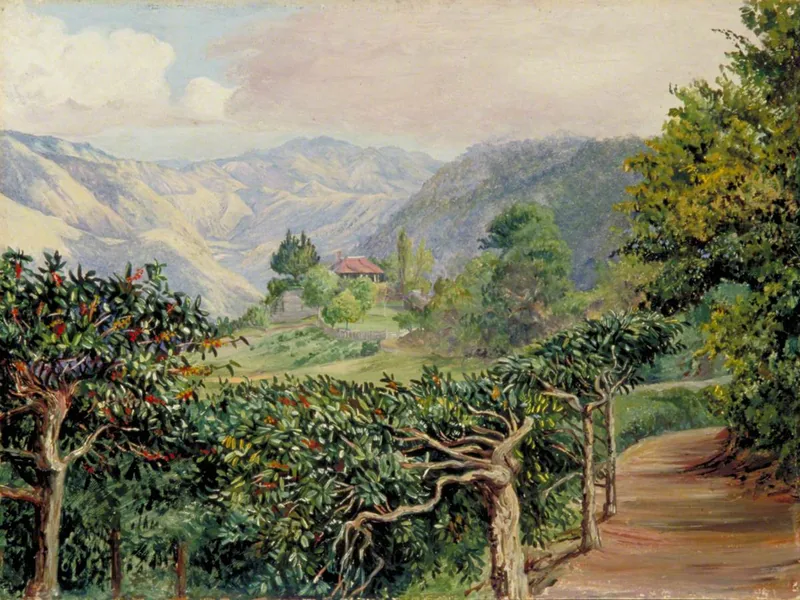
Nobody sat down in 1870 and designed São Paulo. The city we walk through today, the wide avenues, the train lines, the eclectic facades around Centro, got built because one crop made a small number of people extraordinarily rich, and they spent that money on the place they lived. The crop was coffee, and for the better part of a century it was the single largest force shaping this city.
It's worth remembering when you're standing in Praça da República, a few minutes from the Suite. The plaza, the surrounding streets, even the building we're in sit inside a district that only exists in its current form because of what coffee paid for. Read the fuller story of the neighborhood in República: A District With a Republic's Name and the square itself in Praça da República, Stone by Stone.
From the interior to the port
Coffee cultivation moved into the São Paulo interior through the second half of the 19th century, spreading west and north from the Paraíba Valley into what's now the region around Campinas and Ribeirão Preto. The problem was always the same one: how do you get sacks of coffee out of the hills and down to a ship, cheaply and fast enough to matter.
The answer was rail. The São Paulo Railway, opened in 1867, connected the highland city to the port of Santos, cutting a route that mule trains used to take weeks to cover down to a matter of hours. It wasn't built by the state. It was largely financed by the coffee producers themselves, because it directly served their interests, and every additional line that followed into the interior did the same math: shorten the distance between a plantation and a ship, and the profit grows.
By the last decades of the century, that private railway money had reshaped São Paulo into the hub all of it passed through. The city stopped being a colonial backwater on the way to the coast and became the depot the whole export economy pumped through.
What the money built
Coffee fortunes didn't stay in coffee. The planters and the merchants who financed them, exporters, bankers, the families who ran the trading houses, put their money into the city itself. Between roughly 1899 and 1911, under mayor Antônio Prado, the city widened streets, built new plazas, and pushed forward the kind of public works that turn a colonial town into a modern one. Avenida Paulista opened in 1891, laid out on the high ridge west of Centro by the engineer Joaquim Eugênio de Lima, and quickly filled with the mansions of families whose income came from the interior's plantations. Higienópolis and Campos Elíseos filled with similar townhouses. Further east, in Moóca and Brás, the same boom built the crowded worker housing for the immigrants the coffee economy pulled in by the hundreds of thousands, mostly Italian in these decades, who worked the plantations and then the city's new factories.
None of it was charity or civic planning in the way we'd use the term now. It was money looking for somewhere to go, and Centro, walkable from where you're staying, is where a great deal of it landed. For the block-by-block version of that building boom, see How Downtown São Paulo Was Built.
The station that proved it
If one building sums up the era, it's Estação da Luz. The original opened in 1867 as the São Paulo terminus of that first coffee railway, and it was rebuilt into the monumental structure that stands today, completed in 1901, designed with the eclectic architectural taste of the period and built with material shipped from England. For decades it was the real front door to the city: coffee came in from Santos through it, immigrants arrived through it, and the wealth that coffee generated is more or less written into its ironwork and its clock tower. It's two metro stops from the Suite, and it rewards a slow look rather than a quick photo. It's a fair next stop if this history interests you: Estação da Luz if that page exists on this site, or simply go see it.
The railway didn't just move coffee. It moved the whole city's center of gravity toward the tracks, and everything downtown grew around that fact.
What it left behind
The coffee economy didn't last as the world it built. Prices crashed in the 1920s and the crop's dominance faded through the following decades as the city industrialized and diversified, but the shape of things stuck. The wide streets radiating from Centro, the grand station, the plazas Antônio Prado carved out, the sheer scale of a city that grew explosively rather than gradually, all of that traces back to a period when one export commodity funded almost everything visible downtown.
Walk out from the building, through Praça da República and toward Estação da Luz, and you're tracing that money's route in reverse: from the ridge where the barons built their houses, down through the streets their fortunes paved, to the station where it all arrived. If you want the office-with-a-view version of the same city, the six-monitor desk upstairs looks out over a good chunk of this history; more on that at The six-screen office, and more on the room itself at The Suite.
It's a strange thing to owe a downtown to a bean, but that's roughly what happened here. Worth knowing before you head out the door.
Sources
- Luz Station - Wikipedia - https://en.wikipedia.org/wiki/Luz_Station
- 120 years of Luz Station - Google Arts & Culture - https://artsandculture.google.com/story/120-years-of-luz-station-museu-da-lingua-portuguesa/RAURhHm2wnzb1g?hl=en
- A Brief History Of Paulista Avenue - The Culture Trip - https://theculturetrip.com/south-america/brazil/articles/a-brief-history-of-paulista-avenue-sao-paulos-main-street
- Sao Paulo History - Kupi - https://www.kupi.com/en/explore/brazil/sao-paulo/history
At a glance
- Boom19th–20th c.
- LegacyRailways & Centro
- Read nextEstação da Luz
Keep reading
Your base
Everything here is a short metrô ride — or a walk — from the Suite in the Daniel Martins Building.
Reserve the Suite ›