The trouble with the rented meeting room
Almost everyone has sat in one: the hotel or business-center meeting room, hired by the hour or the half-day. Grey carpet, a laminate table, stackable chairs, a screen on a bracket, a jug of water sweating on a tray, and the faint sense of a hundred forgettable meetings that happened there before yours and will happen after. It does the job, technically. It is also completely without character, entirely without privacy in any real sense, and priced in a way that makes you watch the clock instead of the conversation.
For a lot of business, that is fine — a routine meeting in a routine room, and no one expected otherwise. But for the meetings that actually matter — the senior ones, the private ones, the relationship-defining ones — the rented meeting room quietly works against you. It says "we processed you in a box we hired." And there is an alternative that says something very different: a private suite, taken as your meeting space, which gives you a whole floor instead of a hired box, real privacy instead of a shared corridor, and a setting that flatters the occasion instead of flattening it.
This page is about that alternative — when a hotel meeting room is genuinely the right call, when a private suite is the better one, and what each actually costs you in money, privacy and impression. The answer is not "always use a suite." It is "know which meeting you are hosting, and choose accordingly."
What you are actually renting when you rent a boardroom
It is worth being clear-eyed about what the hourly meeting room really is, because its limits are structural, not cosmetic.
When you rent a meeting room, you are renting a slot in a shared facility. The room is not yours; it is yours for the booked hours, after which it resets for the next party. It sits on a floor or a corridor of other identical rooms, which means your "private" meeting has other meetings, other people, and staff with water jugs moving just beyond the door. The privacy is nominal — thin walls, a shared reception, a signing-in book that records exactly who you met and when. And the whole thing runs on a clock: the booking ends, the next group is waiting, and everyone in the room can feel the countdown, which is precisely the wrong pressure for a conversation that needs room to breathe. You are paying, by the hour, for a temporary, semi-private, characterless slot. For routine business, that is a reasonable deal. For anything that matters, you are renting exactly the wrong things.
The suite as a meeting space
Now consider the same need met by a private suite, and notice how many of the boardroom's structural limits simply vanish.
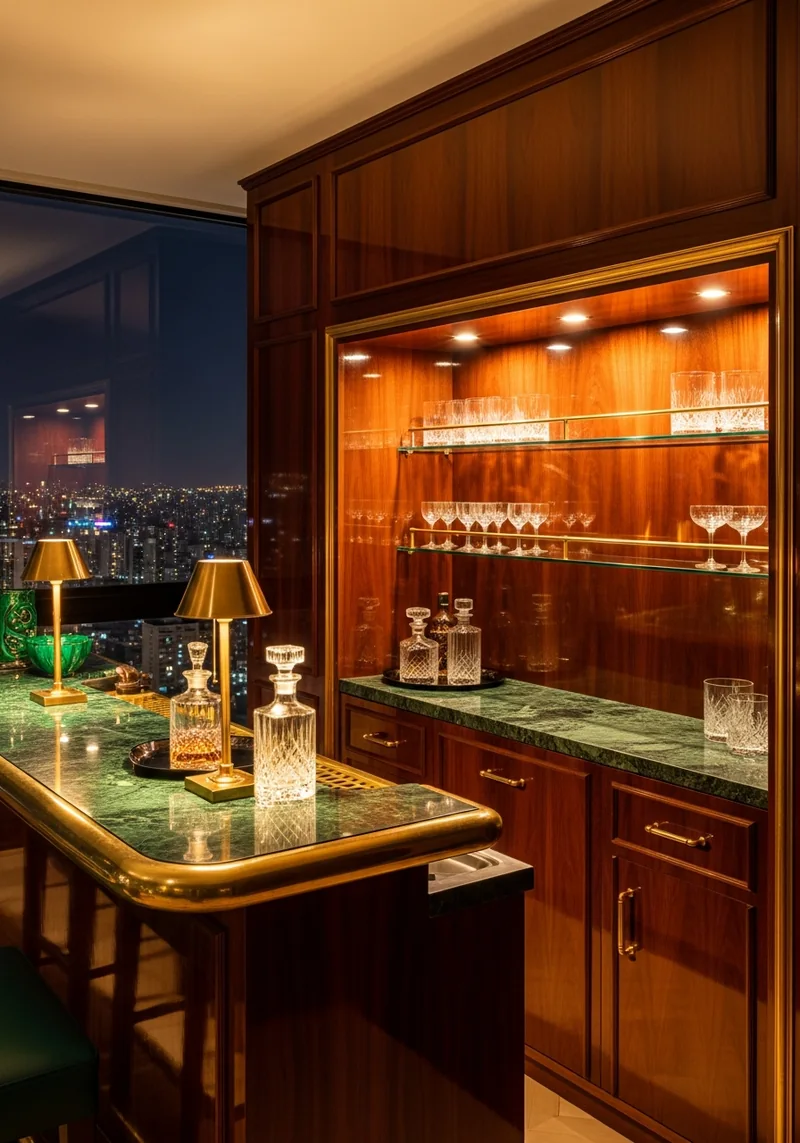
Take the Presidential Suite as your meeting space and you have not a slot but a whole private floor — yours for the day, controlled entirely by you. There is no shared corridor, no reception, no other meetings within earshot, no sign-in book. Privacy is not a claim; it is the physical fact of being alone on your own floor high above the city. There is no clock forcing you to wrap, so the conversation runs on its own natural length. And instead of grey laminate, there is a six-screen executive desk to gather around for the working part, a lounge for the softer part, a bar for the close, and a wall of windows over central São Paulo doing quiet work in the background. It is the difference between hiring a box and hosting on your own ground — and for the meetings where that difference matters, it is decisive.
When the hotel meeting room is the right call
Let me be fair, because a suite is not the answer to every meeting, and pretending it is would be doing you a disservice.
The rented meeting room genuinely wins in several cases. When the group is large — a dozen or twenty people, a formal presentation, a training session — you need a proper conference room, and a suite is simply the wrong size. When the meeting is routine and internal — a standing review, an ordinary working session with people you see all the time — the character of the room does not matter and the cheapest convenient option is the sensible one. When you need it for a single hour in a location convenient to everyone and nothing about the setting is part of the point, an hourly room is efficient and fit for purpose. And when the counterpart's own protocol requires a conventional venue, you follow it. The hotel meeting room is a real tool with real uses; the mistake is only reaching for it out of habit when the meeting actually calls for something better.
When the suite is the better one
The suite comes into its own for a specific and valuable category of meeting — the ones where privacy, impression and time are part of the substance, not just the wrapping.
It wins for the small and senior meeting: a handful of decision-makers and a conversation that matters, which is exactly the scale a suite is built for. It wins for the relationship meeting — courting an investor, deepening a client tie, hosting a partner you want to feel valued — where hospitality is half the point and a hired box offers none. It wins for the negotiation, where a private, unhurried, controlled room is a genuine advantage. It wins for anything confidential, where a shared facility's nominal privacy is not good enough and a private floor's real privacy is a requirement. And it wins for the recurring relationship, where receiving your local contacts in your room each time builds a familiarity no rotating cast of rented rooms ever will. If your meeting is one of these, the suite is not an indulgence; it is the better instrument for the job.
The honest cost comparison
People assume the hotel meeting room is the cheap option and the suite the extravagant one, and for a real day of meetings the comparison is far closer — and often reversed — once you count everything.
The rented meeting room looks cheap because the headline is an hourly or half-day rate. But the true cost of hosting a real day of business in one adds up quickly: the room itself, then the catering charged per head at conference prices, then the extra hours as the day runs long, then — if you also need somewhere to work between sessions, or somewhere to receive a guest privately — a second booking on top. And you are paying all of it to use a space that is characterless and only nominally private. A private suite taken for the day is a single number that includes the whole floor, the working setup, the space to receive people, refreshment you control, and the freedom to run as long as you need — with no per-head catering markup and no overage clock. For a genuine day of senior meetings, the all-in comparison frequently favors the suite, not the boardroom. The full arithmetic across stay, work and meetings is on the cost page.
Privacy, compared directly
The word "private" gets attached to both options, so it is worth being precise about how different the two actually are, because for sensitive business the gap is everything.
A hotel meeting room offers procedural privacy: a door that closes, walls that muffle, a booking that is nominally yours. But it sits in a shared building, on a corridor of other rooms, with a reception that logs your arrival, staff who enter with refreshments, and neighbors a partition away. Anyone watching the corridor knows who you met. A private suite offers actual privacy: you are alone on your own floor, with no shared corridor, no reception log, no neighbors, and no staff wandering through. What is said stays in the room because there is no one else near the room. For a routine meeting the difference is academic. For a confidential negotiation, a sensitive deal, or any conversation you would not want observed, it is the entire point — and only one of the two options actually delivers it.
Control of the environment
Hosting is control, and the two venues hand you very different amounts of it.
In a rented room you control almost nothing: the temperature is what the building sets, the layout is what was there, the lighting is fluorescent and non-negotiable, the refreshments arrive on the facility's schedule, and the whole thing ends when your slot does. In a suite you control everything — the temperature, the seating, the lighting, the timing, what is served and when, and how long it all runs. That control is not vanity; it is the ability to shape the entire feel of the meeting in your favor, to make a guest comfortable in the specific ways that matter, and to respond in real time to how the conversation is going. A host who controls the environment holds a quiet advantage, and the suite hands you that control completely while the rented room withholds nearly all of it.
The impression each makes
Every venue sends a message before business begins, and the two send opposite ones.
The rented meeting room says: we booked a standard box to process this meeting. It is fine, it is neutral, and it communicates nothing beyond adequacy. The private suite says: we received you somewhere considered and private, high above the city. It communicates seriousness, discretion and standing, and it makes the guest feel valued rather than processed. For meetings where the relationship is part of the substance — which is most meetings that actually matter — that difference in impression is worth more than any feature you could list. You are not just choosing a room; you are choosing what your guest feels about the meeting before a word is spoken, and the suite lets you choose something far better than "adequate."
The hybrid meeting
Modern meetings almost always include someone who cannot be in the room, and here the suite's working setup gives it an edge even over a well-equipped boardroom.
The six-screen desk lets you bring remote participants into the meeting properly — at full size, alongside the documents everyone is discussing — so the person across the desk from you and the people up on the screens are all genuinely in the meeting together. You get the intimacy of an in-person host and the reach of a video call at once, in a private room, which is a combination most rented boardrooms handle clumsily and most restaurants cannot handle at all. For a deal team that is always partly remote, that hybrid capability, in a private and impressive setting, is a real and modern advantage.
A simple rule of thumb
If you want a single line to decide by, here it is: rent the room for the routine, take the suite for the moment that matters.
If the meeting is large, formal, internal, or purely functional, book the boardroom and think no more about it — it is the right, efficient tool. If the meeting is small, senior, private, relational, confidential, or in any way consequential — a meeting you would like your guest to remember well and think better of you for — take the suite. The stakes decide the venue. Most people, most of the time, default to the rented room out of habit even when the meeting plainly deserves better; simply pausing to ask "does this one matter?" will tell you which to choose, and for the ones that matter, the suite is the answer.
The catering and refreshment difference
A small but telling difference between the two venues is how they handle feeding and watering a meeting, and it says a lot about the experience each provides.
A rented meeting room hands you a catering menu with per-head charges at conference prices, delivered on the facility's schedule by facility staff — functional, impersonal, and marked up. A private suite lets you handle hospitality on your own terms: coffee made and offered warmly, water and refreshments to hand, a drink at the bar to close, or a full working dinner if the occasion earns it, all without a catering invoice or a fixed schedule. The difference is between being catered to by a facility and hosting your guest yourself, and the latter is both warmer and, usually, cheaper. For a meeting where hospitality is part of the point — which is most meetings that matter — controlling the refreshment yourself rather than ordering it from a menu is a real upgrade in both feel and cost.
For a run of meetings over several days
If you have not one meeting but a series over several days, the comparison tilts further toward the suite, because you can base the whole run there.
Booking a hotel meeting room for each of several days means repeated bookings, repeated charges, and a room that is never really yours — plus, if you also need somewhere to work between meetings, a separate arrangement for that. Taking a suite for the same days gives you a single base you occupy throughout: you work there between meetings, host each meeting there as it comes, and never pack up or relocate. For a multi-day run of meetings — a week of investor conversations, a series of client sessions, a stretch of negotiations — the suite becomes not just a meeting room but a base of operations, which is something a series of hourly room bookings can never be. One floor for the week beats a dozen room bookings, on cost, on convenience, and on the impression of permanence and seriousness it creates.
The impression on a senior guest
The more senior your guest, the more the venue matters, and the more a suite outperforms a rented room.
A junior counterpart may not notice or care where a meeting happens. A senior one — a principal, a decision-maker, someone whose time and attention are genuinely scarce — reads the venue as a signal of how seriously you took the meeting and how you operate. Receiving them in a private, impressive, high-floor space says you are a peer worth their time; herding them into a generic rented room says the opposite, however good your pitch. For meetings with senior people, where the relationship and the impression are a real part of the outcome, the suite's ability to receive someone properly is worth far more than the modest cost difference. You get one chance to make a senior guest feel they are dealing with a serious operation, and the room is the first and largest part of that impression.
Booking and flexibility
Finally, the two differ in how you book them, and the suite's directness is part of its appeal.
A rented meeting room is booked through a facility's system, in fixed slots, with the rigidity that implies. A suite is arranged directly with the host, for exactly the day or days you need, with the flexibility to start early, run late, or adjust as your plans firm up. You are dealing with a person who looks after the floor, not a booking portal, so the arrangement bends to your actual meeting rather than forcing your meeting into a slot. For anything that matters — where you want the timing and the setup to be right rather than standardized — that direct, flexible arrangement is worth having. The reserve page is where it starts.
Why this suite specifically
Among private-floor options, the Presidential Suite is unusually well suited to serving as a meeting space, for reasons that go beyond looks.
It is a whole floor, so privacy and arrival are seamless — your guest steps off the lift onto your floor, received rather than processed. It has a real working stage in the six-screen desk, so meetings with substance to show have somewhere to show it. It has the close built in — a bar and a wall of windows fifteen steps from the working half — so the shift from business to relationship is effortless. And it has location: on Praça da República, above the metrô, in the center of São Paulo, so a local guest reaches you in minutes and an arriving one is impressed before hello. For the practical craft of running a meeting here well, see how to host a client meeting in a penthouse; for the case for hosting on your own ground at all, closing the deal where you stay.
The board or investor meeting
Some of the highest-stakes meetings — a board session, an investor update, a fundraising conversation — are exactly the ones a suite serves better than a rented room, and it is worth seeing why.
These meetings are senior, confidential, and consequential, and the impression they make matters. A rented boardroom processes them adequately; a private suite hosts them, with the discretion such conversations require, the control to run them at the right pace, and a setting that signals you operate at a serious level. For an investor meeting especially, where you are partly selling yourself and your operation, receiving people on an impressive private floor rather than in a generic hired room does real work in the impression you make. And the privacy is not optional for conversations about money, strategy and sensitive numbers — a shared facility cannot honestly provide it, and a private floor delivers it completely. For the meetings where the stakes are highest, the suite is not the indulgent choice; it is the sound one.
The candidate interview
Hiring is another case where where you meet matters, and a private suite quietly strengthens your hand.
When you are interviewing a senior candidate — someone you are trying to convince to join, as much as assess — the setting is part of the pitch. Receiving them in a private, impressive space says the operation is serious and going somewhere, which matters when you are asking a talented person to bet their career on you. It also gives the conversation the privacy a frank interview needs, away from a public café or a shared office where others might overhear. For a founder or a small firm competing for scarce talent, the ability to host a candidate somewhere that makes the venture look substantial is a real, if subtle, advantage over a coffee-shop interview. The room helps you sell the role, and selling the role is half of hiring well.
For legal and financial meetings
A particular class of meeting — legal, financial, transactional — has confidentiality as a hard requirement rather than a preference, and here the suite is not just better but often necessary.
Discussions of deals, sensitive figures, legal strategy, or private client matters cannot safely happen in a shared facility with thin walls, a sign-in book, and staff moving through. They require genuine privacy — a controlled environment where the conversation is neither overheard nor observed — and a private floor provides exactly that, while a rented meeting room only nominally does. For lawyers, bankers, dealmakers and anyone whose meetings touch confidential material, the suite's real seclusion is the deciding factor: it is the difference between a venue that merely feels private and one that actually is. When confidentiality is a professional obligation rather than a comfort, the private floor is the responsible choice.
When you do not need a room at all
Honesty requires acknowledging the case where neither a suite nor a rented room is the answer: the meeting that should simply be a video call.
Not every meeting justifies a physical venue. A routine check-in, a quick alignment, a conversation with someone in another city — these are often best handled by video, at no cost and no logistics, and reaching for any physical room would be over-engineering. The suite competes with the rented meeting room, not with the video call; it earns its place for the meetings that genuinely benefit from being in person and in private — the senior, the relational, the confidential, the consequential. If a meeting does not need to be physical at all, do not make it so. Save the suite for the meetings where being in the room together, privately and well, actually changes the outcome — which is precisely the category of meeting worth hosting properly.
A worked example: a half-day of meetings
Put numbers-shaped structure on it and the comparison gets vivid. Picture a half-day in São Paulo with three back-to-back meetings and a working gap between them.
The rented-room version: you book a meeting room for the block, pay for the hours and the catering, and have nowhere of your own to work in the gaps — so you camp in a café or a lobby between sessions, and receive each guest in a generic hired room with the clock running. The suite version: you take the floor for the day, host all three meetings on your own private floor, work at the six-screen desk in the gaps, offer coffee you control rather than order, and never once relocate or watch a clock. Same three meetings; two completely different experiences of the day. One is a series of transactions in hired boxes with dead time in between; the other is a day run from your own base, with the gaps productive and the meetings hosted. For a day built around meetings, the suite does not just match the rented room — it turns the whole day into something more coherent and more impressive.
Discretion when the stakes are real
For the meetings where confidentiality genuinely matters, the gap between a rented room and a private floor stops being a matter of comfort and becomes a matter of substance.
A sensitive negotiation, a conversation about money or a deal in progress, a discussion that must not be overheard or even seen to be happening — these cannot be safely held in a shared facility with a corridor of other rooms, a sign-in book, and staff moving through. A private floor offers what such conversations require: no shared corridor, no record of who visited, no neighbors, no interruptions. You are alone on your own floor, and the conversation is genuinely unobserved. For high-stakes, confidential business, that real discretion is not a nice-to-have; it is the reason to choose a private floor over any rented room, however well-appointed the rented room is. Privacy you can actually rely on is a feature only the suite provides.
The multi-party meeting
Some meetings involve several parties who should not all be crowded into a single characterless room, and a whole floor gives you room to stage them.
When you are hosting multiple people or multiple sides — a negotiation with a counterparty and advisors, a meeting that needs breakout conversations, a session where you want to move between formal and informal registers — a single boardroom is a constraint. A whole floor lets you use its geography: the desk for the formal part, the lounge for a side conversation, the bar for the informal close, even space for one party to confer privately while you host the other. That flexibility to stage a complex meeting across a private floor, rather than cramming everyone into one rented box for a fixed hour, is something only a suite provides. For meetings with moving parts, the extra room and the ability to move people around it is a genuine practical advantage.
Myths about meeting in a suite
A few misconceptions keep people from choosing a suite when it would serve them better, so let me clear them up.
"It will seem unprofessional." Received properly, in the working part of the floor, a suite meeting is no less professional than any private office — and considerably more private than most. "It will seem like showing off." Only if you play it that way; kept understated, it reads as confidence, not boast. "It's only for entertaining, not real business." Wrong — the six-screen desk makes it a serious working venue, better equipped than many boardrooms. "It must be more expensive." For a real day of meetings with catering and hosting, the all-in comparison often favors the suite. Each of these myths dissolves on contact with how a suite meeting actually works. The full case for the practice's legitimacy is on is it normal to hold business meetings in a suite.
For the recurring meeting
If you meet the same people regularly in São Paulo, the case for a suite over a rented room strengthens, because familiarity compounds.
Receiving your regular contacts in the same private, impressive room each time builds a rhythm and a relationship that a rotating cast of anonymous rented rooms never will. Your counterparts come to associate meeting you with a particular, memorable place; the room becomes part of your relationship with them, a small but real asset. A serviced meeting room, booked ad hoc and different each time, builds none of this — it is forgettable by design. For anyone who does recurring business in the city and wants those meetings to accumulate into relationships rather than reset each time, a consistent private base to host them in is quietly valuable, in a way the pay-per-hour room can never be.
A short FAQ
Quick answers for anyone weighing a suite against a rented meeting room.
- When is a hotel meeting room the better choice? For large, formal, internal, or purely functional meetings — book the room.
- When is the suite better? For small, senior, private, relational, confidential, or consequential meetings.
- Is it really more private? Yes — a whole floor with no shared corridor, reception log, or neighbors.
- Can I book it for just part of a day? Yes — directly with the host, for the time you need.
- Can I host several meetings in one day there? Yes — take the floor for the day and run them all from your own base.
Questions before you commit? The reserve page reaches the host directly — we reply within a day.
At a glance
- vsHotel boardroom
- You getThe whole floor
- FeelPrivate, not hourly
Keep reading
Your base
Everything here is a short metrô ride — or a walk — from the Suite in the Daniel Martins Building.
Reserve the Suite ›